



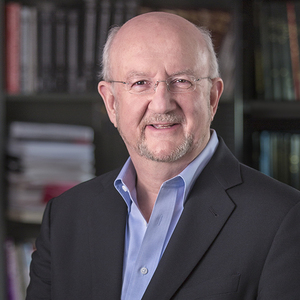

Eugene Borgida
- Media Contact
- SPN Mentor
Eugene Borgida is Professor of Psychology and Law at the University of Minnesota. He is a Morse-Alumni Distinguished Professor of Psychology and held the Fesler-Lampert Chair in Urban and Regional Affairs for 2002-2003. In addition, Borgida is an Adjunct Professor of Political Science, and has served as Co-Director of the Center for the Study of Political Psychology, which he co-founded, and Co-Editor of the journal, Political Psychology. From 1992-95 he was Associate Dean and Executive Officer of the College of Liberal Arts, and from 1996-99 he served as chair of the Psychology Department.
Borgida's research has been funded by NIMH, NIH, NSF, and The Pew Charitable Trusts. He received the Distinguished Teacher Award from the College of Liberal Arts and the system-wide Morse-Alumni Award for Outstanding Contributions to Undergraduate Education in 1989. With L. Rudman, Borgida won the 1994 Gordon Allport Intergroup Relations Prize, and in 1989, he and colleagues J.L. Sullivan and J. Aldrich won the Heinz Eulau Award for the best paper published in the American Political Science Review. He is a Fellow of the APS and a Fellow in several APA divisions. He has served on the Board of Directors for the Association of Psychological Science (APS) and the Social Science Research Council (SSRC). Borgida's research interests include social cognition, attitudes and persuasion, psychology and law, and political psychology.
Primary Interests:
- Applied Social Psychology
- Attitudes and Beliefs
- Causal Attribution
- Gender Psychology
- Internet and Virtual Psychology
- Judgment and Decision Making
- Law and Public Policy
- Persuasion, Social Influence
- Political Psychology
- Prejudice and Stereotyping
- Social Cognition
Research Group or Laboratory:
Note from the Network: The holder of this profile has certified having all necessary rights, licenses, and authorization to post the files listed below. Visitors are welcome to copy or use any files for noncommercial or journalistic purposes provided they credit the profile holder and cite this page as the source.
Image Gallery
Books:
- Borgida, E., Federico, C. M., & Miller, J. (Eds.) (2020). At the forefront of political psychology: Essays in honor of John L. Sullivan. New York: Routledge.
- Borgida, E., Federico, C., & Sulivan, J. L. (Eds.). (2009). The political psychology of democratic citizenship. New York: Oxford University Press.
- Borgida, E., & Fiske, S. T. (Eds.). (2007). Beyond common sense: Psychological science in the courtroom. New York: Wiley-Blackwell.
- Mikulincer, M., Shaver, P. R., Borgida, E., & Bargh, J. A. (Eds.) (2015). APA handbook of personality and social psychology, Volume 1: Attitudes and social cognition. Washington, DC: APA Books.
- Zweigenhaft, R., & Borgida, E. (Eds.). (2017). Collaboration in psychological science: Behind the scenes. New York: Worth Publishers.
Journal Articles:
- Borgida, E., Worth, K. A., Lippmann, B., Ergun, D., & Farr, J. (2008). Beliefs about deliberation: Personal and normative dimensions. Journal of Social Issues, 64, 551-570.
- Clatch, L., & Borgida, E. (2021). Plea bargaining: A novel test of dual discounting preferences in a non-monetary loss context. Personality and Social Psychology Bulletin, 47(7), 1039-1056.
- Clatch, L., Walters, A., & Borgida, E. (2020). How interdisciplinary? Taking stock of decision-making research at the intersection of psychology and law. Annual Review of Psychology, 71, 541-561.
- Ergun, D., Deason, G., Borgida, E., & Charles, G. (2008). Race and redistricting: What the print media conveys to the public about the role of race. Journal of Social Issues, 64, 619-638.
- Hatsukami, D. K., Joseph, A. M., LeSage, M., Jensen, J., Murphy, S. E., Pentel, P. R., Kotlyar, M., Borgida, E., Le, C., & Hecht, S. S. (2007). Developing the science base for reducing tobacco harm. Nicotine & Tobacco Research, 9 (Supplement 4), S537-S553.
- Miller A. L, & Borgida, E. (2016). The separate spheres model of gendered inequality. PLoS ONE 11(1): e0147315.
- Oxendine, A., Sullivan, J. L., Borgida, E., Riedel, E., Jackson, M., & Dial, J. (2007). The importance of political context for understanding civic engagement: A longitudinal analysis. Political Behavior, 29, 31-67.
- Stark, E., Borgida, E., Kim, A., & Pickens, B. (2008). Understanding public attitudes toward tobacco harm reduction: The role of attitude structure. Journal of Applied Social Psychology, 38(10), 2615-2635.
- Stark, E., Kim, A., Miller, C., & Borgida, E. (2008). Effects of including a graphic warning label in advertisements for reduced exposure tobacco products: Implications for persuasion and policy. Journal of Applied Social Psychology, 38(2), 281-193.
- Vitriol, J. A., Appleby, J., & Borgida, E. (2019). Racial bias increases false identification of black suspects in simultaneous lineups. Social Psychological and Personality Science, 10(6), 722-734.
- Vitriol, J. A., Lavine, H., & Borgida, E. (2020). Meta-cognition and resistance to political persuasion: Evidence from a three-wave panel study. Social Influence, 15(1), 17-33.
Other Publications:
- Borgida, E., & Kim, A. (2007). Reflections on being an expert witness in class action sex discrimination litigation. In F. J. Crosby, M. S. Stockdale, & S. A. Ropp (Eds.), Sex discrimination in the workplace. Oxford: Blackwell Publishing.
- Borgida, E., Kim, A., Stark, E., & Miller, C. (2008). Educating consumers about "safer" tobacco products: Some lessons from psychology and law. In Haugtvedt, Kardes, & Herr (Eds.), Handbook of Consumer Psychology. Mahwah, NJ: Lawrence Erlbaum and Associates.
- Fiske, S. T., & Borgida, E. (2008). Providing expert knowledge in an adversarial context: Social cognitive science in employment discrimination cases. Annual Review of Law and Social Science, 4, 123-148.
Courses Taught:
- Attitudes and Social Behavior
- Law, Race, and Psychology
- Political Psychology Proseminar
- Social Cognition
- Social Psychology Proseminar
Eugene Borgida
Department of Psychology
University of Minnesota
75 East River Road
Minneapolis, Minnesota 55455
United States of America
- Work: (612) 625-3381
- Mobile: 612-875-8811
- Fax: (612) 626-2079
